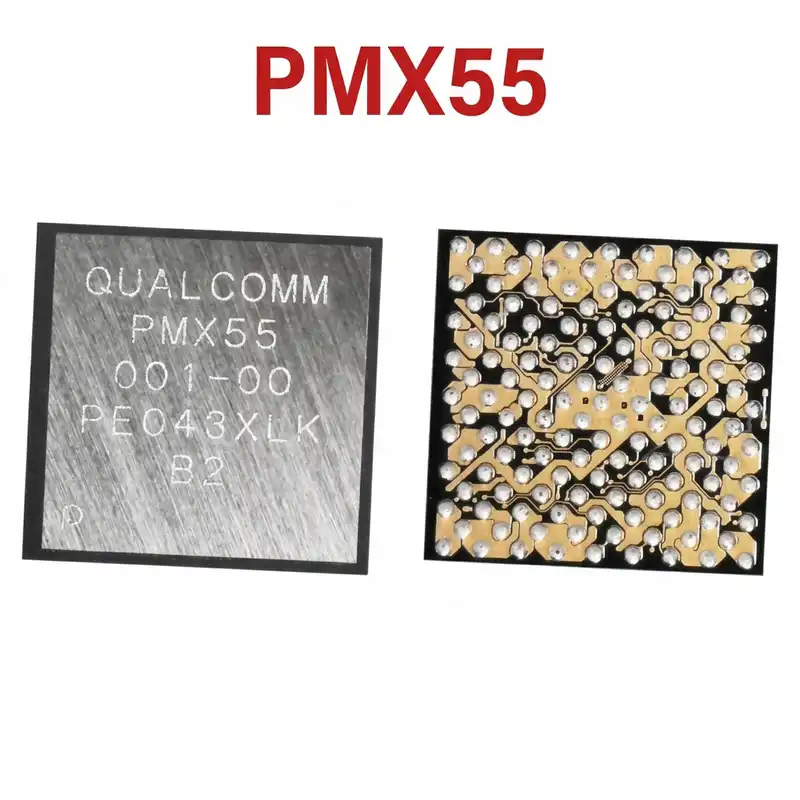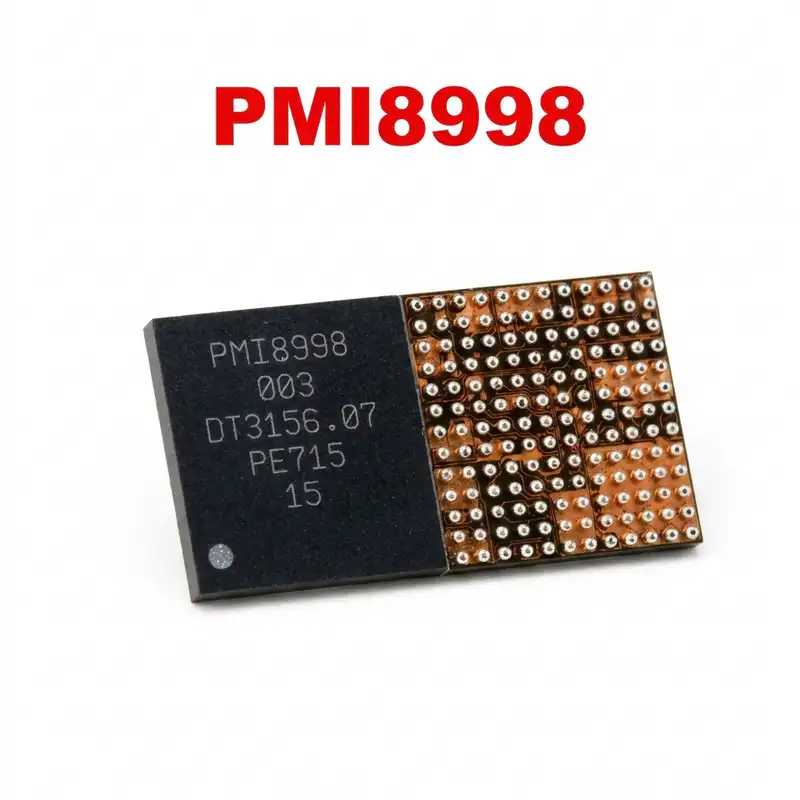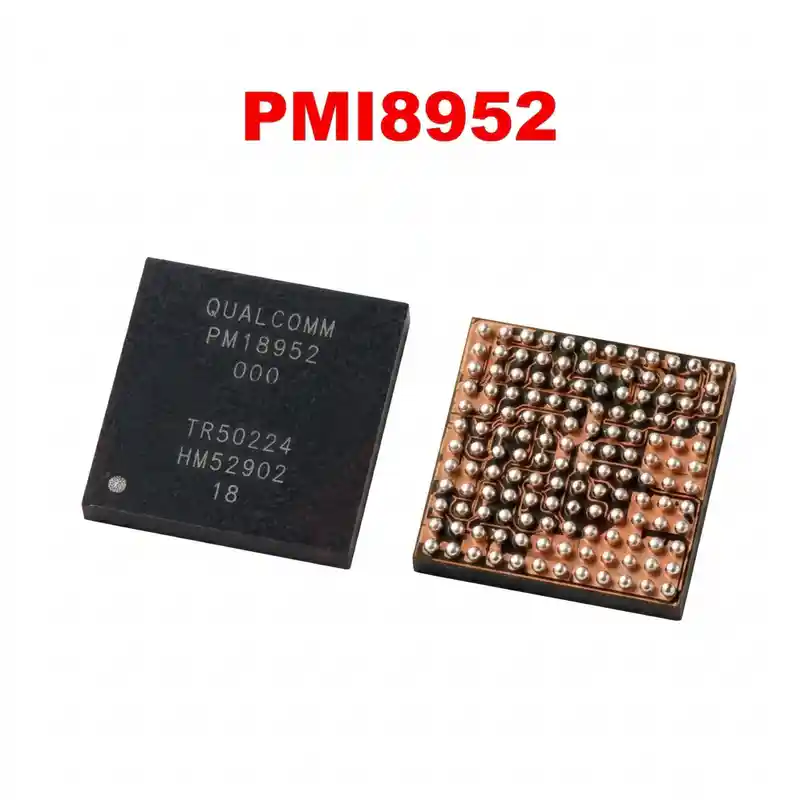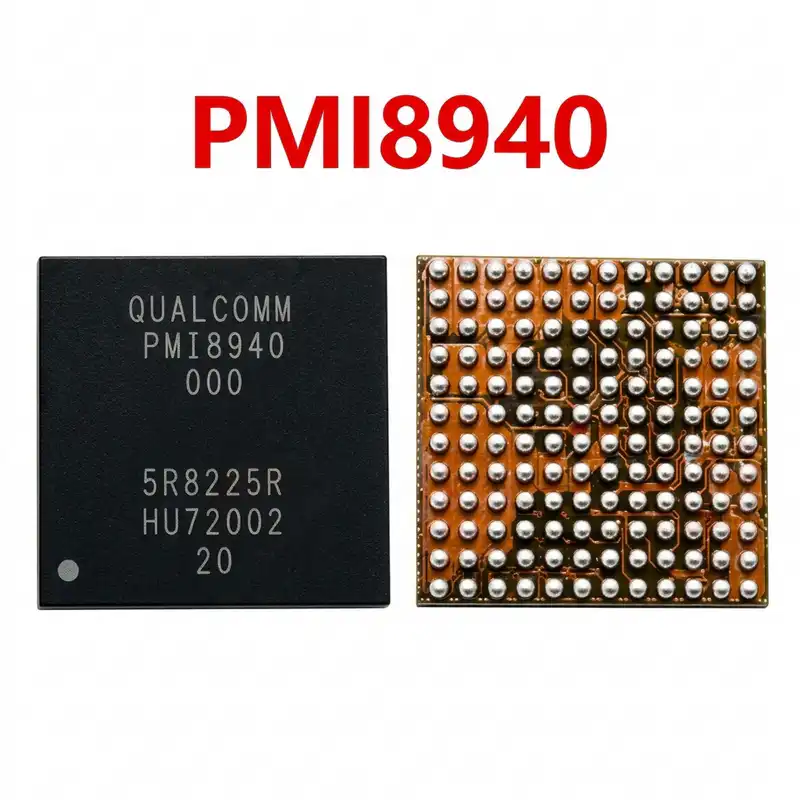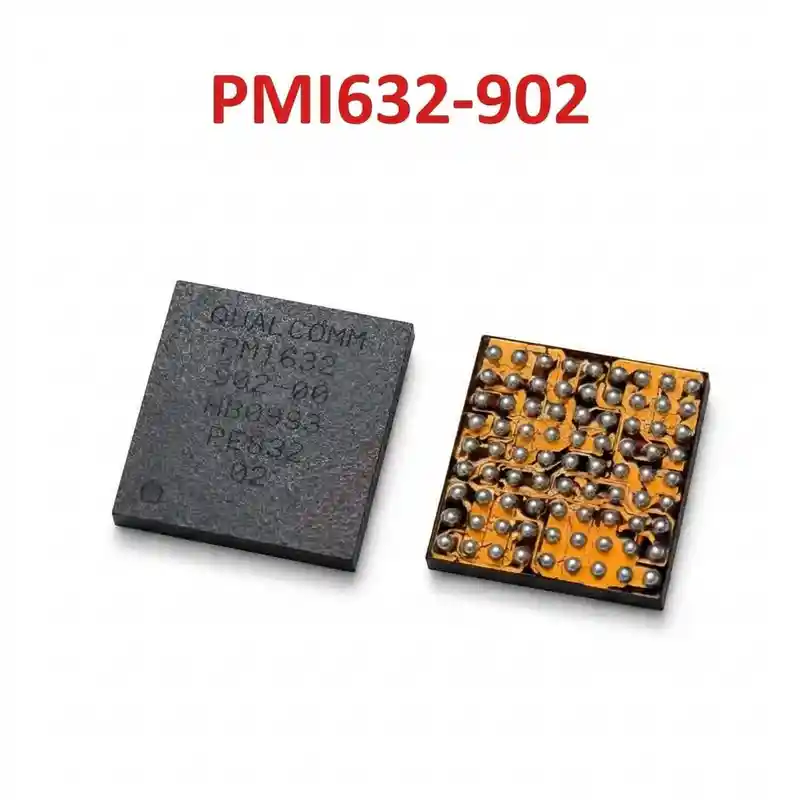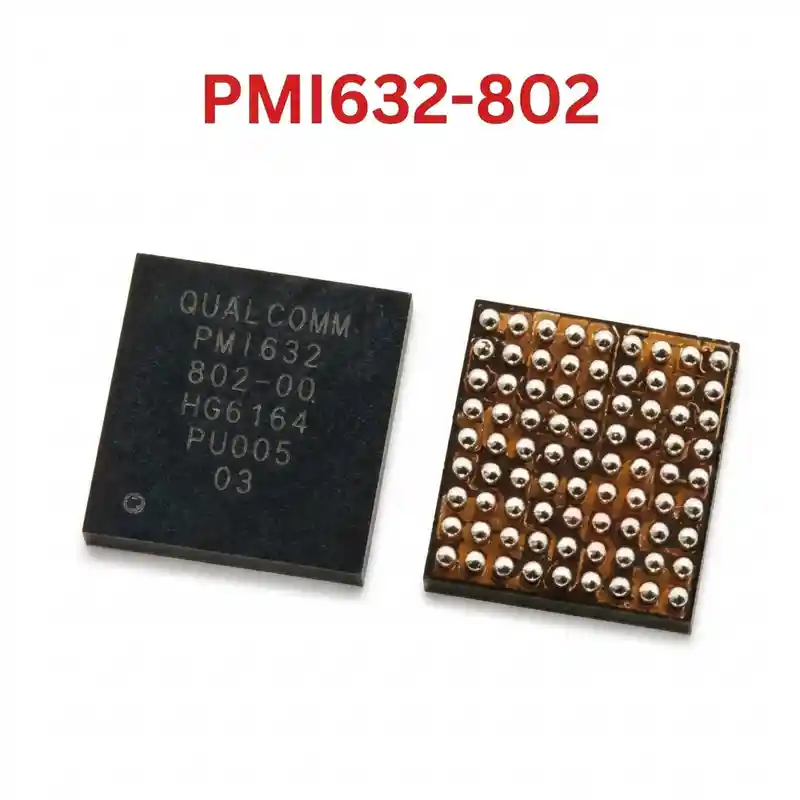

PM8916 IC
As low as
Rs 200.00
Worldwide shipping · Cash on Delivery
Product Details
====================================================================================================
QUALCOMM PM8916 / PM8916-0VV SNAPDRAGON 410 PRIMARY PMIC REPAIR GUIDE
====================================================================================================
1. PRODUCT IDENTIFICATION & SILICON SPECIFICATIONS:
----------------------------------------------------------------------------------------------------
- Silicon Laser Marking: PM8916 (Common Production Variant: PM8916-0VV / PM8916-001)
- Silicon Manufacturer: Qualcomm Technologies, Inc.
- Semiconductor Process Node: 28nm LP (Low Power) CMOS Process
- System Classification: Primary Master Power Management Unit (Core PMIC + Charger + Audio Codec)
- Associated SoC Platforms: Qualcomm Snapdragon 410 (MSM8916), Snapdragon 412, APQ8016 / APQ8016E
- Architecture Type: Monolithic High-Integration Power Management Hub
- Package Form Factor: Wafer-Level Chip-Scale Fine-Pitch BGA (WLCSP)
- Regulated Output Domains:
* Synchronous Step-Down Buck Converters:
- VDD_APC (Quad-Core Cortex-A53 CPU Cluster): 0.90V – 1.15V Dynamic Voltage Scaling (DVS).
- VDD_MSS (Modem Subsystem & Baseband Digital Core): 1.05V – 1.15V.
- VDD_MEM / VDD_DDR (LPDDR2 / LPDDR3 Memory Rails): Clean 1.20V / 1.80V.
* 25+ Integrated Low-Dropout (LDO) Regulators:
- VREG_L6_1P8 (1.8V System IO, Sensors, and eMMC VCCQ).
- VREG_L11_2P95 (2.95V eMMC Flash Storage Core VCC).
- VREG_L17_2P85 (2.85V Display Panel, Backlight Driver enable, and Touch Controller).
- Dedicated ultra-low-noise rails for WTR4905 / WTR2965 RF Transceivers, GPS, and Wi-Fi/BT combo.
* Integrated Charging & Analog Functions:
- Switch-mode 1.5A USB Li-ion Battery Charger with dynamic VPH_PWR / VSYS power-path management.
- Power-Key debounce logic (KYPD_PWR_N) and 19.2MHz system reference clock oscillator driver.
- Cold boot reset tree generator (PON_RESET_N) with continuous PS_HOLD (1.8V) hardware monitoring.
- Built-in Audio Codec with high-efficiency Class-D/AB speaker driver and stereo headphone amplifier.
2. COMPATIBLE SMARTPHONES & DEVICES:
----------------------------------------------------------------------------------------------------
- Samsung:
* Galaxy Grand Prime (SM-G530H, SM-G530FZ, SM-G530BT)
* Galaxy Core Prime 4G (SM-G360F, SM-G360H, SM-G360G)
* Galaxy J5 2015 (SM-J500F, SM-J500H, SM-J500G, SM-J500FN)
* Galaxy A3 (SM-A300H, SM-A300F), Galaxy A5 (SM-A500H, SM-A500F), Galaxy A7 (SM-A700F)
* Galaxy E5 (SM-E500H), Galaxy E7 (SM-E700H)
- Xiaomi:
* Redmi 2 (2014811, 2014813, 2014818), Redmi 2 Prime, Redmi Note 4G (SD410 Single SIM variant)
- Lenovo & Motorola:
* Lenovo A6000, Lenovo A6000 Plus, Lenovo A6010, S60, S90 Sisley
* Moto E 2nd Gen 4G (XT1527, XT1524), Moto G 3rd Gen (XT1540, XT1541)
- Huawei, Asus & HTC:
* Huawei Honor 4X (Che2-L11 Snapdragon variant), Ascend G620S
* Asus ZenFone 2 Laser (ZE500KL, ZE550KL)
* HTC Desire 510, Desire 620
- Development Boards:
* 96Boards DragonBoard 410c, Quectel SC20 Smart Modules
3. TYPICAL BOARD-LEVEL FAULT SYMPTOMS:
----------------------------------------------------------------------------------------------------
- Completely Dead Logic Board (0.000A Draw on DC Power Supply):
* Connecting DC supply to battery terminals and pressing the power button draws strictly 0.000A.
* Cause: Internal power key contact pull-up resistor blown, shorted 1.8V LDO rail, or defective
19.2MHz clock circuit.
- Low Current Boot Loop / Hang on Power Key Release (0.03A – 0.07A):
* DC power supply current jumps to 40mA–60mA upon pressing the power button, but instantly drops back
to 0.00A as soon as the power button is released.
* Cause: Missing PS_HOLD handshake from MSM8916 CPU, or corrupted eMMC storage power (2.95V VCC).
- Direct Qualcomm HS-USB QDLoader 9008 Port Detection:
* Phone fails to power on and connects directly to PC as Qualcomm 9008 port.
* Cause: VDD_APC core voltage unstable or missing eMMC memory power lines.
- Fake Charging or Zero Charging Amperage (0.00A / No Charge Animation):
* Phone plugged into 5V USB charger draws 0.00A, or charging battery icon displays on screen without
increasing percentage. Burned VBUS input switching MOSFET inside PM8916.
- Total Audio Failure (No Earpiece, Loudspeaker or Mic):
* Phone boots normally, but has no sound output or microphone input due to fluid damage or crack in the
audio codec silicon block inside PM8916.
4. STEP-BY-STEP MULTIMETER TESTING & DIAGNOSTICS:
----------------------------------------------------------------------------------------------------
A. Cold Testing (Diode Mode Check - Board Powered Off, Battery Disconnected):
1. Place digital multimeter in Diode Mode. Connect RED probe to motherboard GND shield:
- Main VSYS / VBAT Positive Rail: Normal ~390mV – 480mV.
- VDD_APC (Cortex-A53 Core Inductor): Normal ~70mV – 120mV (low impedance, must NOT be 0.000V).
- VDD_MSS (Modem Buck Inductor): Normal ~110mV – 180mV.
- VREG_L6_1P8 (1.8V System IO Capacitor): Normal ~360mV – 470mV.
- eMMC VCC 2.95V Output Capacitor: Normal ~420mV – 540mV.
- Power Key Pin on Switch: Normal ~520mV – 650mV.
2. Short-Circuit Isolation:
- If VBAT / VSYS reads 0.000V (beeping dead short to ground), inject 3.7V DC (current limit 1.5A).
Check PM8916 and surrounding MLCC bypass capacitors with thermal camera or rosin vapor.
B. Live Operating Voltage Check (Hot Testing):
1. Connect DC power supply at 3.8V to battery connector terminals:
- Check Power Key terminal: Must measure steady 1.8V DC.
2. Press and hold Power Button while measuring power coils:
- VDD_APC core buck coil must measure 1.05V – 1.15V DC.
- VDD_MSS modem buck coil must measure steady 1.10V DC.
- Verify 1.8V and 2.95V rails at eMMC bypass capacitors.
- Check PS_HOLD test point: Must rise from 0V to 1.8V and stay locked high. If PS_HOLD drops back
to 0V within 1–2 seconds, CPU/eMMC communication is interrupted.
5. SOLDERING, REBALLING & REWORK SPECIFICATIONS:
----------------------------------------------------------------------------------------------------
- IC Removal:
* Dispense high-grade, non-corrosive RMA tacky BGA flux around PM8916.
* Hot air rework station settings: 310°C – 320°C with 40% airflow (medium circular nozzle).
* Apply heat uniformly in circles. Once solder balls fully liquefy, lift the IC vertically using fine tweezers.
- Pad Preparation & Cleaning:
* Apply leaded solder (Sn63/Pb37) to motherboard footprint pads to lower melting point.
* Level pads perfectly flat using copper desoldering braid and a soldering iron tip set to 290°C – 300°C.
* Clean residual flux thoroughly with 99% Isopropyl Alcohol (IPA); inspect pads under microscope.
- Reballing Procedure:
* Use a 0.12mm dedicated Amaoe PM1 or universal Qualcomm PMIC stencil.
* Squeegee 183°C leaded solder paste uniformly into all stencil apertures.
* Reflow gently with hot air at 280°C – 290°C with low airflow (20%) until uniform solder spheres form.
- Alignment & Installation:
* Spread a microscopic, transparent film of BGA flux over PCB pads.
* Align Pin 1 orientation dot precisely with the PCB silkscreen indicator.
* Reflow at 305°C – 315°C with 35% airflow until chip self-centers on solder surface tension.
* Allow motherboard to cool naturally to room temperature for 5 minutes before connecting DC power.
====================================================================================================
You may also like