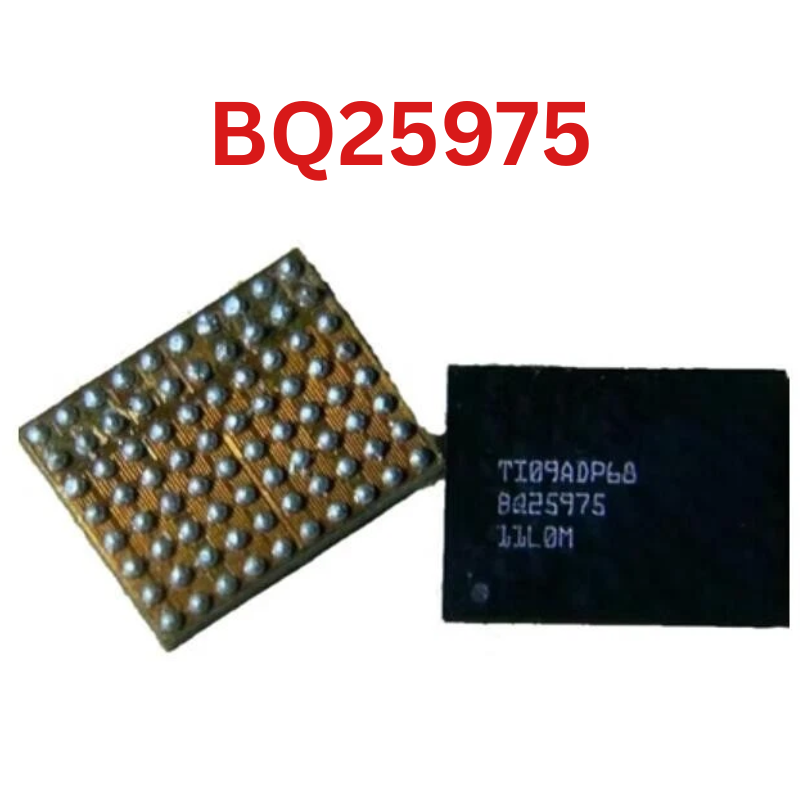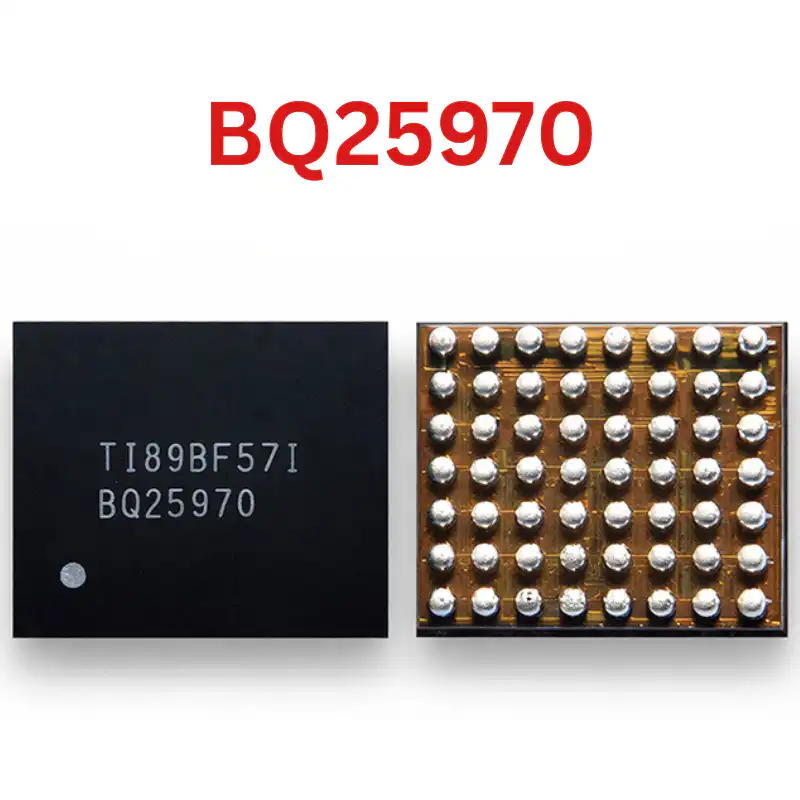

BQ25968 IC
As low as
Rs 210.00
Worldwide shipping · Cash on Delivery
Product Details
Product Details:
- Part Number: BQ25968 (BQ25968YFFR)
- Manufacturer: Texas Instruments (TI)
- Function: I2C Controlled Single-Cell 6A High-Efficiency Switched-Capacitor (Charge Pump / Flash Charge) Fast Battery Charger with Integrated 16-bit ADC
- Architecture: 2:1 Switched-Capacitor topology running at 50% duty cycle (Input voltage is 2x battery voltage, output current to battery is 2x input current, reaching 97% peak efficiency)
- Maximum Fast Charge Current: Up to 6.0A direct charging current to the battery
- Input Operating Voltage: 3.2V to 12.0V (supports up to 17V tolerance with external OVP FET)
- Diagnostic ADC: Built-in 16-bit high-precision ADC monitoring BUS voltage, battery voltage, charging current, and die/connector temperatures
- Protection Systems: Input overvoltage (BUS_OVP), input overcurrent (BUS_OCP), battery overvoltage (BAT_OVP), battery overcurrent (BAT_OCP), cycle-by-cycle MOSFET current limiting, and dual thermal sensing
- Package / Pin Count: 56-Ball DSBGA / WCSP (YFF Package, 0.4mm ball pitch)
- Mounting Type: Surface Mount BGA (Ball Grid Array)
Usage:
- Deployed as the dedicated high-power flash charging (Turbo Charge / 33W+) secondary controller in smartphones (widely used in Xiaomi Poco X3 NFC, Poco X3 Pro, Xiaomi Mi 10T, Redmi Note series, Oppo, and Vivo devices).
- Operates in a dual-charger architecture alongside a primary buck charger (such as BQ256xx or BQ2589x): the primary IC handles trickle charging, normal charging, and system power-path, while BQ25968 activates for ultra-fast, high-current charging.
- 2:1 switched-cap conversion halves the current flowing through the external charging cable, minimizing power loss and thermal buildup across the Type-C port.
- Replaced during motherboard repair to resolve faults where the phone charges normally on a slow 5V charger but disconnects or reboots on a 33W Fast/Turbo charger, charging recognition failures, excessive heating in the charging section, and VBUS short-circuit faults.
You may also like